Ludo Cash - Win Real Rewards
Smartplay RewardsBoard
4.6466.00 Reviews
- Version
- 15.3
- Installs
- 10.00M
- Age Rating
- Everyone
Screenshots




Our Review of Ludo Cash - Win Real Rewards
 Analysis by Appyee
I went into Ludo Cash - Win Real Rewards expecting a familiar board-game experience with a rewards angle, and that is exactly where its appeal lies. It keeps the recognizable rhythm of Ludo while giving each match a more goal-oriented feel than a casual game played only to pass a few minutes. My overall view is positive, but with an important qualification: this is best treated as a competitive Ludo game with a rewards theme, not as a dependable way to make money.
The game is free to install, aimed at Everyone, and developed by Smartplay Rewards. Its store summary presents the central idea as Ludo tournaments with real rewards and no deposits, while the short description reduces that idea to “Ludo Cash.” That combination makes the app easy to understand at first glance, but the practical experience depends on whether you enjoy repeated matches, accept the luck involved in dice-based play, and approach rewards with realistic expectations.
How the Ludo experience feels in everyday play
The basic attraction is immediate. Ludo is one of those board games that needs very little explanation, so I could get into a match without learning a complicated ruleset or studying a long tutorial. The familiar race around the board creates a pleasant balance between planning and chance: I still have to decide which piece to move, when to bring another token into play, and whether an aggressive move is worth the risk, but the dice prevent the game from becoming a pure test of skill.
That mix is especially useful on a phone. A match can fit naturally into a short break, a commute, or the few minutes before an appointment. I found the format more approachable than a strategy board game that demands a long uninterrupted session. At the same time, the tournament framing gives a reason to stay focused. I am not simply moving pieces around for nostalgia; I am trying to make better decisions than the opposing players in the match.
The rewards angle changes the mood more than it changes the board itself. A normal Ludo app can be relaxing because the result feels unimportant. Here, the possibility of rewards makes every decision feel more consequential. That can be motivating when I want a little extra tension, but it can also make an unlucky roll more irritating. Anyone considering this game should be comfortable with that emotional trade-off before taking the competitive side seriously.
One useful way to approach it is to separate the two experiences. First, judge whether the Ludo play is enjoyable on its own. Then decide whether the tournament and reward structure adds something worthwhile. If the underlying matches are not fun, the reward promise will not fix that for long. If you already like Ludo, the added competitive purpose may make familiar rounds feel less repetitive.
Why the large player base matters
The game has passed 10 million installs and holds an average rating of 4.6, which suggests that it has reached a substantial audience and made a strong first impression with many players. I would not treat those figures as a guarantee that every match will suit me, but they do make the app feel more established than an obscure Ludo experiment.
There are also around 95 thousand ratings and 466 reviews, so the public response is not based on only a handful of early users. That is useful context when deciding whether the app is worth trying. Still, ratings compress many different expectations into one number. A player who enjoys quick board matches may rate it highly, while someone focused mainly on withdrawing rewards may judge the same experience very differently.
The developer, Smartplay Rewards, has positioned the game around the connection between Ludo tournaments and rewards rather than presenting it as a purely traditional board app. That focus gives the product a clear identity. It also means I would pay closer attention to the tournament flow and reward-related instructions than I would in a standard offline Ludo game.
Small decisions make the matches more interesting
The most satisfying part of the game is not simply getting a lucky number. It is deciding how to use a favorable roll. Moving one piece forward may bring it closer to safety, while moving another can create a chance to capture an opponent or open a second route toward the finish. Those choices are basic, but they are enough to make repeated rounds feel active rather than completely automatic.
A practical habit I found helpful was avoiding the temptation to advance only the token that is already closest to the goal. Keeping several pieces in play can give me more options on later turns, especially when a particular roll would otherwise be wasted. That does not defeat bad luck, but it reduces the number of turns where I have only one sensible move. In a rewards-focused match, preserving options is often more valuable than chasing a single dramatic move.
I also learned to treat captures carefully. Sending an opponent backward can be satisfying, but an aggressive move is not always the best long-term choice if it leaves my own piece exposed. The right decision depends on the board position, the distance to safety, and how many usable pieces I have available. This is one of the reasons the game works better for me as a competitive board title than as a passive dice roller.
Another useful approach is to set a personal stopping point before beginning a session. Because the reward theme encourages “one more match,” it is easy to continue after a frustrating loss while trying to recover the result. I prefer deciding in advance how many rounds I am willing to play. That keeps the game recreational and prevents the tournament structure from turning a short break into an unnecessarily long session.
The main limitation: rewards can create the wrong expectation
The biggest weakness is not the Ludo board itself. It is the gap between the excitement of seeing “real rewards” and the practical uncertainty that naturally surrounds any reward-based game. A player may install it expecting a predictable return, but results depend on tournament outcomes, available opportunities, and the player’s own willingness to keep competing. I would never describe it as a substitute for income.
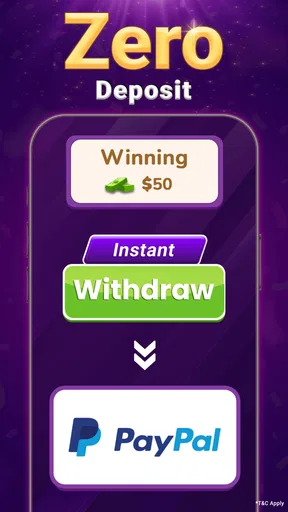
The phrase “zero deposits” makes the concept more approachable because it removes the immediate worry of paying to enter. Even so, no-deposit play does not mean no trade-offs. Time, attention, repeated matches, and the frustration of losing through unlucky rolls all have a cost. For me, the healthiest mindset is to view any reward as a possible bonus attached to play I already enjoy, not as compensation I am entitled to receive.
Dice-based competition also introduces a fairness concern from the player’s point of view, even when the rules are familiar. A thoughtful decision can still fail because the needed roll does not appear. That is normal for Ludo, but the disappointment feels sharper when the match has a tournament or reward context. Players who want outcomes determined almost entirely by skill may prefer chess, checkers, or another board game with less randomness.
The game is also not the obvious choice for someone seeking a calm offline pastime. Its appeal comes from the competitive and rewards-oriented setting, so it is better suited to players who want a reason to keep returning to matches. If I only wanted to play Ludo with family members on one device or enjoy a completely relaxed solo session, a conventional Ludo app might be a more natural fit.
Who will get the most from it
I think this game fits players who already understand Ludo and want a more purposeful version of the familiar format. It can suit someone who enjoys short competitive sessions, likes testing decisions under pressure, and is willing to accept that luck remains part of the result. The free entry makes it easy to explore without committing money at the start, which is a meaningful advantage for curious players.
It is also a reasonable option for people who enjoy a light tournament atmosphere but do not want to learn an elaborate competitive game. The rules are accessible, and the board gives enough room for tactical choices without becoming mentally exhausting. I could imagine recommending it to a friend who plays Ludo casually but wants matches to feel more engaging than a purely decorative mobile version.
On the other hand, I would steer away players who dislike reward-based mechanics, feel uncomfortable with chance affecting competitive results, or expect a guaranteed financial outcome. It is also a poor match for anyone who tends to chase losses. When a game connects wins with rewards, self-control matters more than usual. The best experience comes from deciding how much time to spend before the match begins, rather than letting the last result make that decision.
Families should also consider the age label in context. The game is rated Everyone, which makes it broadly accessible, but younger players may focus on the reward idea without understanding the difference between entertainment and reliable earnings. I would explain that distinction clearly before handing it to a child. For adults, the same advice applies in a different form: keep the reward element in perspective and judge the app mainly by whether the Ludo play is enjoyable.
How it compares with ordinary Ludo apps
Compared with a standard Ludo game, this title has a clearer reason to play repeatedly. Traditional alternatives are often strongest when I want a simple board recreation, a local family match, or a low-pressure way to pass time. This one adds competitive purpose through tournaments and rewards, so it feels more goal-driven. That is its strongest point of difference.
The trade-off is that the extra purpose can make the experience less relaxed. In an ordinary app, losing a match is usually easy to shrug off. Here, the tournament framing can encourage me to analyze every decision and replay the result in my head. Players who enjoy that tension will likely see it as added motivation. Players who want Ludo mainly for comfort may find the rewards focus distracting.
It also differs from deeper strategy board games. The easy rules make it far more approachable than a complex tactical title, but the dice mean that careful play cannot fully control the outcome. I would choose this app for quick, accessible competition, not for a pure measure of strategic ability. If I wanted every victory to reflect planning with minimal randomness, I would look elsewhere in the board-game category.
The game’s current version is 15.3, and it supports devices running at least Android 7.1. That makes it accessible to people using older compatible Android phones rather than requiring a recent handset. In practical terms, I would still keep the device updated and make sure there is enough free space for a smooth installation, but the stated operating-system requirement is relatively welcoming.
What I would check before committing time
Before treating the app as part of my regular routine, I would spend several sessions learning the match flow rather than immediately focusing on rewards. I would look at how tournaments are presented, how results are explained, and whether the overall pace feels comfortable. This lets me decide whether I like the product itself instead of being guided only by the possibility of a prize.
I would also read each tournament’s conditions carefully inside the app. Reward-based games often make the broad idea easy to understand while placing the important practical details in the individual event flow. Even without assuming any particular rule, it is sensible to check what a match requires, how progress is displayed, and what steps are involved after a result. That habit prevents avoidable surprises and helps keep expectations realistic.
For everyday use, I would reserve it for short, defined sessions. For example, if I had fifteen minutes before dinner, I could play a small number of matches and stop regardless of whether the last one was a win or loss. That approach makes the app fit around my day rather than allowing the reward loop to dictate my schedule. It also gives me a clearer sense of whether the entertainment is worth my time.
Another practical tip is to judge performance over a group of sessions instead of one lucky or unlucky match. A single roll can dominate the result, so one victory does not prove that I have mastered the game, and one loss does not prove that the app is poor. Looking at the quality of decisions, the clarity of the interface, and my enjoyment across several play periods gives a fairer personal assessment.
My verdict after weighing the appeal and friction
My conclusion is that this is a convincing choice for a specific kind of Ludo player. It takes an accessible board game and gives it a competitive rewards-centered purpose, making short matches feel more meaningful than they would in a basic casual version. The free format and broad age rating lower the barrier to trying it, while the strong public response and large install base suggest that many players find the concept appealing.
Its weakness is equally clear: the rewards theme can encourage expectations that the game cannot reasonably guarantee, and the luck built into Ludo may feel more frustrating when a tournament result matters. I would not install it as a money-making plan. I would install it because I enjoy Ludo, want tournament-style motivation, and am happy to treat rewards as an extra possibility rather than the main purpose.
My recommendation is simple: try it if you want quick, competitive Ludo with a rewards angle, but keep your time and expectations under control. If you prefer relaxed family play, offline simplicity, or strategy determined almost entirely by skill, a traditional board alternative will probably serve you better. For everyone else, Smartplay Rewards has created a focused variation that is worth exploring on its own terms.
Verdict
Strengths of Ludo Cash - Win Real Rewards
- Simple Ludo gameplay is easy for beginners to understand.
- Quick matches make it convenient for short play sessions.
- Cash rewards can add extra excitement to regular matches.
- The colorful interface is clear and easy to navigate.
- Multiple game modes may offer variety for returning players.
Limitations of Ludo Cash - Win Real Rewards
- Cash contests may not be available in every country or region.
- Withdrawals can require identity verification and payment details.
- Some tournaments may require entry fees or in-app purchases.
- Results can depend heavily on luck, despite competitive elements.
- Minimum withdrawal limits may delay access to smaller winnings.
Other Releases by Smartplay Rewards
View All
Blackjack Cash
Board4.8
Similar Picks in This Category
View All
Ludo King®
Gametion4.1

Ludo
Yarsa Games4.6

Tile Master® - Matching Game
Higgs Studio3.6

Checkers Online
CC Games4.6

Dominoes
Loop Games4.7

Chess
Chess Prince4.6
Frequently Asked Questions
What is Ludo Cash - Win Real Rewards?
Ludo Cash - Win Real Rewards is a mobile Ludo game that combines traditional board gameplay with competitive matches and reward-based features. Players can roll the dice, move their tokens, and compete against other users in different game modes. Depending on the version available in your region, rewards may be offered as points, virtual currency, or redeemable prizes rather than guaranteed cash payments.
Can I really win real money or rewards with Ludo Cash?
The app’s name suggests that players may earn real rewards, but winnings are not guaranteed. Reward availability, withdrawal methods, minimum cash-out limits, and eligibility rules can vary by country and may change over time. Before playing competitively, carefully read the in-app terms, review the withdrawal requirements, and confirm whether the advertised rewards are supported in your location.
Is Ludo Cash - Win Real Rewards free to download and play?
The application may be available as a free download, although it can include advertisements, optional purchases, entry fees, or other monetization features. Some matches or reward opportunities may require virtual coins or a qualifying balance. Check the store listing and the in-app payment screens before confirming any transaction, especially if the game uses real-money deposits or paid competitive rooms.
Is Ludo Cash safe for my personal information and payments?
Safety depends on the developer, the official download source, and the permissions requested by the current version of the app. Download Ludo Cash only from a trusted app store, avoid unofficial APK files, and review its privacy policy before registering. If payment or identity verification is required for withdrawals, make sure the process is clearly explained and never share passwords, banking PINs, or unnecessary sensitive information.
What devices and accounts are required to play Ludo Cash?
Ludo Cash - Win Real Rewards is designed for mobile devices, but compatibility can depend on your Android or iOS version, available storage, and regional availability. An internet connection is normally needed for online matches, account synchronization, advertisements, and reward tracking. You may also need to create an account or sign in with an approved method to participate in tournaments or request withdrawals.
Play our best games!


